Attar Fragrance Sourcing: What Buyers Should Know About Kannauj-Style Production
In the intricate world of perfumery, attars hold a revered position. These concentrated, alcohol-free fragrance oils, deeply rooted in tradition, offer a unique olfactory experience. For B2B buyers—from FMCG manufacturers to luxury home fragrance brands—understanding the provenance and production methods of attars is crucial for ensuring quality, authenticity, and performance in their end products. This is especially true when considering Kannauj-style production, a method that is synonymous with traditional Indian perfumery.
At JK Aromatics & Perfumers, with our legacy of “Creating Sensorial Dreams Since 1989,” we understand the profound impact of sourcing authentic and high-quality raw materials. Our expertise in fragrance development extends to guiding our partners through the nuances of specialized ingredients like Kannauj attars, ensuring seamless integration into diverse applications while adhering to the highest standards of stability and compliance.
The Legacy of Kannauj: A Deep Dive into Traditional Attar Production
Kannauj, a historic city in Uttar Pradesh, India, has been aptly dubbed the “Perfume Capital of India”. For centuries, this region has perfected the art of attar making, preserving ancient techniques that imbue these fragrances with unparalleled depth and character. The traditional methods used in Kannauj are central to the identity and quality of the attars produced there.
What is Kannauj-Style Attar?
Kannauj-style attars are natural perfume oils produced by distilling aromatic materials such as flowers, herbs, spices, roots, and woods. Unlike many modern perfumes, they are traditionally alcohol-free and embrace the pure essence of their botanical sources. The defining characteristic often involves hydro-distillation into a base, traditionally sandalwood oil, which acts as a natural fixative and carrier for the delicate aromatic compounds. This process results in a complex, evolving fragrance that is distinct from synthetic counterparts.
The Deg Bhabka Method: An Ancient Art
The cornerstone of Kannauj attar production is the “Deg Bhabka” (or “Deg Bhapka”) method, an ancient hydro-distillation technique that has been passed down through generations. This artisanal process is a blend of craftsmanship, patience, and natural elements, ensuring that the delicate aroma and therapeutic properties of the raw materials remain intact.
- Raw Material Preparation: The process begins with the careful selection and harvesting of fresh botanical materials, often collected in the early morning to capture their peak fragrance. These could be rose petals, jasmine flowers, vetiver roots, or various other aromatic plants.
- Distillation in the Deg: The chosen plant material and water are placed into a large copper still known as a “Deg”. The Deg is then sealed tightly with a mixture of clay and cotton to prevent steam from escaping. A fire, traditionally fueled by wood or cow dung cakes, is lit beneath the Deg, and the temperature is carefully managed.
- Condensation in the Bhapka: The Deg is connected by a bamboo pipe, called a “Chonga,” to a copper receiver known as a “Bhapka”. The Bhapka is typically submerged in a cooling water tank (Gachchi) and contains the base material, traditionally sandalwood oil. As the fragrant steam from the Deg travels through the Chonga and cools in the Bhapka, it condenses, and the aromatic compounds are absorbed by the sandalwood oil.
- Separation and Maturation: This distillation process is slow and can take several hours or even days, often involving multiple distillations to achieve the desired concentration and purity. After extraction, the attar is aged, a crucial step that allows the complex molecules to meld and mature, further enriching its depth and complexity.
Expert Takeaway: For B2B buyers, understanding the Deg Bhapka process is key to appreciating the artisanal value and inherent variations in traditional attars. Each batch can possess subtle differences influenced by factors like harvest, weather, and the distiller's hand, contributing to its unique character. These natural variances should be considered during formulation and quality control.
Key Considerations for Sourcing Kannauj-Style Attars
Sourcing attars, particularly those produced via traditional Kannauj methods, requires a discerning eye and a deep understanding of quality parameters. For fragrance manufacturers and brands, this translates into rigorous selection and partnership strategies.
Raw Material Authenticity and Quality
The foundation of a superior attar lies in the quality and authenticity of its raw botanical materials. The fragrance industry faces challenges in obtaining natural ingredients due to environmental factors and over-harvesting. Ethical sourcing and traceability of raw materials are becoming increasingly important.
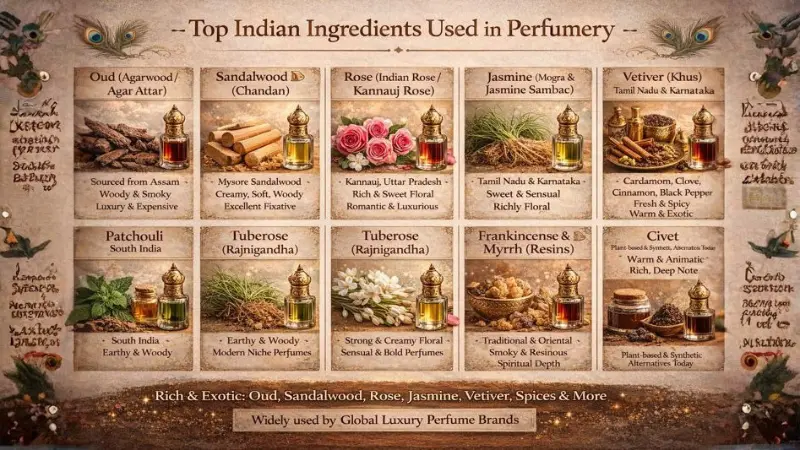
- Botanical Sourcing: Verifying the origin and species of the botanicals used is paramount. For example, genuine Indian sandalwood (Santalum album) is highly prized, but its scarcity makes it prone to substitution or adulteration.
- Purity of Base Oil: When sandalwood oil is used as the base, its purity directly impacts the final attar. Adulterated sandalwood oil will compromise the entire fragrance profile.
The Distillation Process: Artistry and Precision
The Deg Bhapka method is a craft that relies heavily on the skill and experience of the distiller.
- Skill of Distillers: Experienced artisans in Kannauj have an intuitive understanding of temperature control and timing, crucial for extracting the most delicate aromatic compounds without scorching them.
- Duration and Control: The slow distillation process, sometimes repeated, ensures a full spectrum of notes is captured, resulting in a more complex and long-lasting fragrance.
Purity and Adulteration: A Buyer's Vigilance
The market for natural fragrances, including attars, is susceptible to adulteration, where lower-quality oils or synthetic compounds are added to authentic essential oils. This compromises quality, safety, and consumer trust.
- Common Adulterants: Attars can be diluted with cheaper carrier oils, or synthetic fragrance compounds might be added to enhance scent or extend volume.
- Testing and Verification: Reputable suppliers and buyers utilize advanced analytical techniques such as Gas Chromatography-Mass Spectrometry (GC-MS) to verify the chemical composition and purity of attars. Other methods like Fourier-transform infrared spectroscopy (FTIR) and sensory assessment by trained professionals also help detect adulteration.
| Adulteration Type |
Impact on Attar Quality |
Detection Methods |
| Dilution with cheaper oils |
Reduced scent intensity, altered fragrance profile, diminished longevity. |
GC-MS, specific gravity, refractive index, sensory assessment. |
| Addition of synthetic aroma chemicals |
Unnatural notes, lack of complexity, potential skin irritation, reduced "natural" claim. |
GC-MS, FTIR, carbon-14 dating for natural origin confirmation. |
| Substitution with inferior botanical species |
Significantly altered fragrance, loss of intended therapeutic properties. |
Botanical identification, GC-MS for chemical markers. |
Understanding Fragrance Profile and Longevity
Attars are known for their deep and long-lasting fragrance, attributed to their high concentration of pure essential oils and oil-based composition, which allows for slow evaporation.
- Natural Variations: Being natural products, attars can exhibit slight batch-to-batch variations in scent, influenced by climate, soil, and harvest. This is part of their charm but requires careful consideration for consistent product lines.
- Dry-down and Substantivity: Attars evolve on the skin, releasing layers of fragrance over extended periods. Their substantivity (ability to adhere and last on a substrate) is excellent due to their oil base.
Regulatory Compliance and Certification
As with all fragrance ingredients, attars must comply with relevant regulations to ensure safety and quality.
- IFRA Standards: The International Fragrance Association (IFRA) sets standards for the safe use of fragrance ingredients. While attars are natural, their individual components can contain restricted substances, necessitating IFRA compliance depending on the application category. Natural materials are not exempt from IFRA guidelines.
- Quality Standards: Buyers should look for suppliers who adhere to good manufacturing practices (GMP) and provide certificates of analysis (CoA) for their attars, confirming purity and compliance.
Integrating Attars into Modern Fragrance Applications
For B2B entities, integrating traditional attars into modern product lines requires technical understanding and formulation expertise. JK Aromatics & Perfumers specializes in bridging this gap, offering solutions that leverage the unique qualities of attars while ensuring product performance.
Application Compatibility and Stability
The oil-based nature of attars necessitates careful consideration for compatibility within various product bases.
- Personal Care: In products like soaps, body washes, lotions, and hair oils, attars can offer unique, natural scent profiles. Considerations include skin suitability, potential for sensitization (IFRA limits are crucial here), and stability within emulsion systems or surfactant bases. The alcohol-free nature of attars makes them a gentler option for skin.
- Home Fragrance: For scented candles, wax melts, and diffusers, attars can provide rich, long-lasting aromas. Key factors include heat stability, diffusion (fragrance throw) in wax or diffuser oils, and compatibility with different wax types or carrier solvents.
- Air Care: While typically less common due to cost and profile, subtle attar notes can be incorporated into luxury air fresheners or passive air care solutions where depth and naturalness are desired. Diffusion and longevity in the air are primary concerns.
Expert Takeaway: When formulating with natural attars, conduct thorough stability testing across temperature, light, and different base compositions. Natural attars, with their complex chemical makeup, can react differently than synthetic fragrance oils, potentially causing discoloration, scent shift, or reduced performance if not properly evaluated. Consider microencapsulation for enhanced stability and controlled release in challenging applications.
Formulation Challenges and Solutions
Working with attars presents unique formulation opportunities and challenges.
- Blending with Synthetics: Attars can be skillfully blended with synthetic aroma chemicals to create hybrid fragrances that offer the best of both worlds: the natural depth of attars and the performance/cost-effectiveness of synthetics. This requires expertise in balancing natural variances with synthetic consistency.
- Cost Optimisation: Due to the labor-intensive production and precious raw materials, pure Kannauj attars can be costly. Strategically using them as hero notes or blending them can optimize cost while retaining their unique signature.
- Fragrance Stability and Longevity: Proper storage is critical for attars; they should be kept away from direct sunlight, in cool, stable temperatures, and in sealed original bottles to prevent oxidation and degradation. Traditional attars use stable bases like sandalwood oil, which naturally resists oxidation.
Partnering with an Experienced Attar Fragrance Manufacturer
Navigating the complexities of attar sourcing and integration requires a trusted partner. An experienced attar fragrance manufacturer or supplier acts as an invaluable resource for B2B buyers.
Expertise in Sourcing and Quality Control
A reputable fragrance house, like JK Aromatics & Perfumers, brings decades of experience in sourcing authentic, high-quality attars directly from reliable distillers in Kannauj. We employ stringent quality control protocols, including analytical testing, to ensure the purity and consistency of every batch. For those seeking the best attar manufacturers in India, this expertise is non-negotiable.
Custom Formulation and Development
Our perfumers can develop custom fragrance solutions that incorporate attars, tailoring them for specific applications, performance requirements (e.g., fragrance throw, substantivity, blooming), and cost targets. This includes navigating IFRA compliance for various product categories and ensuring base compatibility.
Scalability and Supply Chain Reliability
For B2B buyers, consistent supply and scalability are critical. Partnering with an established attar manufacturer in India ensures access to a reliable supply chain, minimizing risks associated with raw material availability and production variations.
The JK Aromatics & Perfumers Advantage in Attar Sourcing
As a heritage fragrance house established in 1989, JK Aromatics & Perfumers stands as a leading B2B solution provider for fragrance needs. Our deep understanding of traditional perfumery, combined with modern technical expertise, makes us an ideal partner for sourcing and utilizing Kannauj-style attars. We offer:
- Authentic Sourcing: Leveraging our long-standing relationships with traditional distillers in Kannauj to procure the finest, unadulterated attars.
- Rigorous Quality Assurance: Implementing comprehensive testing and quality control at every stage to ensure purity, authenticity, and compliance.
- Application Expertise: Guiding manufacturers on the optimal use of attars across personal care, home fragrance, and air care segments, ensuring stability, performance, and cost-effectiveness.
- Custom Formulation: Creating bespoke fragrance blends that artfully incorporate attars to achieve unique scent profiles and market differentiation.
Our commitment to “Creating Sensorial Dreams” extends to helping our partners harness the timeless beauty and complexity of Kannauj attars, transforming them into high-performance fragrance solutions for today's discerning consumers.
Conclusion
Sourcing attar fragrances, particularly those produced using the traditional Kannauj “Deg Bhapka” method, is an art and a science. For B2B buyers, it involves navigating the intricacies of raw material authenticity, artisanal production processes, quality control, and regulatory compliance. By understanding these critical aspects and partnering with an experienced fragrance house like JK Aromatics & Perfumers, brands can confidently integrate the rich heritage and unparalleled olfactory depth of Kannauj attars into their product portfolios, delivering exceptional sensory experiences to their customers.