Walk into any temple, church, mosque, or meditation space, and you'll notice something right away.
The scent.
There's something about certain fragrances that just feel sacred. They calm your mind, help you focus, and create this atmosphere that's perfect for prayer or meditation.
But here's the thing. Not every "spiritual" fragrance actually works. Some smell artificial. Some are too weak. Some are so overpowering you can't even breathe properly.
And in 2026, buyers—whether they're individuals setting up home altars or businesses stocking spiritual products—are getting smarter about what they want.
So what exactly are people looking for in religious and spiritual fragrances right now? What makes a good temple incense? What scents work for meditation? And how has the market changed?
Let me walk you through it.
For millions of people, fragrance isn't just about making a space smell nice.
It's part of the ritual. Part of the experience. Part of the connection to something bigger.
When someone lights incense before prayer, they're not just going through the motions. That scent helps them shift into a different mindset. It signals the start of something sacred.
Same thing with meditation oils, diffuser blends, or temple offerings. The right fragrance enhances the experience. The wrong one? It breaks the moment.
That's why choosing the right religious or spiritual fragrance matters so much—both for personal use and for businesses selling these products.
Let's start with what people actually buy.
Certain scents have been used in spiritual practices for centuries. Others are newer but have become popular because of changing preferences.
This is the classic. The gold standard.
Sandalwood has been used in Hindu, Buddhist, and Jain rituals for thousands of years. It's calming, grounding, and has this rich, woody scent that just feels sacred.
People use it for puja, meditation, yoga, and temple offerings.
What buyers want:
Authentic sandalwood fragrance—not a cheap synthetic version. It should smell warm and natural, not overly sweet or chemical.
Mogra is huge in Indian spiritual practices.
It's floral, sweet, and uplifting. Often used in evening prayers and festivals.
What buyers want:
A fragrance that's strong enough to fill a room but not so overpowering that it gives you a headache. Natural-smelling, not artificial.
Rose has spiritual significance across multiple religions—Hinduism, Islam, Christianity.
It's associated with love, devotion, and purity.
What buyers want:
Fresh, authentic rose scent. Not the fake, perfume-y smell you get in cheap products.
These are big in Christian traditions, especially during Christmas and Easter.
Frankincense has a resinous, slightly citrusy scent. Myrrh is warmer and more earthy.
What buyers want:
Authentic resin-based fragrance. The real stuff, not some synthetic imitation.
Lavender's become super popular for meditation and mindfulness practices.
It's calming, soothing, and helps with relaxation.
What buyers want:
Pure, natural lavender. The kind that actually helps you relax, not the overly sweet versions.
Patchouli has deep roots in Buddhist and Hindu traditions.
It's earthy, grounding, and often used in meditation and yoga.
What buyers want:
Rich, natural patchouli. Not the hippie-era stereotype version, but something more refined.
Oud is massive in Islamic traditions, especially in Middle Eastern countries.
It's intense, woody, and luxurious.
What buyers want:
High-quality oud that smells rich and authentic. Real oud is expensive, so buyers are willing to pay more for the real deal.
Camphor is used in Hindu rituals, often burned during aarti.
It has a sharp, clean, purifying scent.
What buyers want:
Pure camphor fragrance that's strong but not overwhelming.
This blend of sandalwood and champa flower is iconic in yoga and meditation circles worldwide.
What buyers want:
The traditional, authentic Nag Champa scent—not watered-down versions.
Tulsi is sacred in Hinduism and often used in daily prayers.
It has a fresh, slightly spicy, herbal scent.
What buyers want:
Natural tulsi fragrance that feels pure and sacred.
If you're looking for quality incense stick fragrances, JK Aromatics & Perfumers offers a wide range that covers traditional and modern spiritual scents.
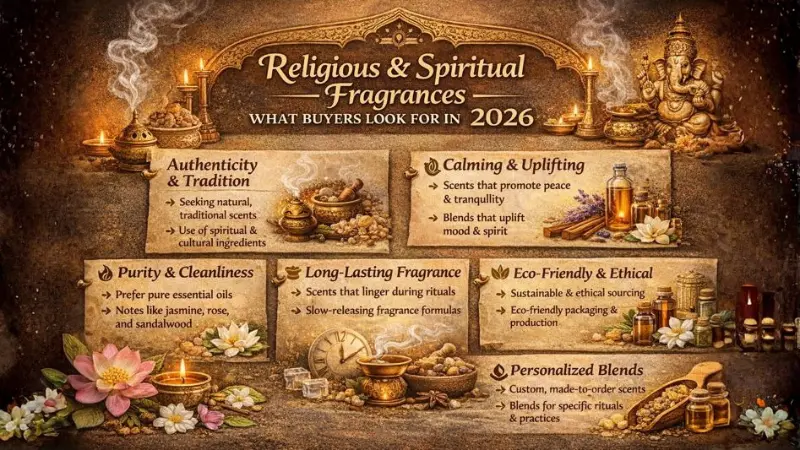
The market's evolved. People aren't just buying whatever's on the shelf anymore.
Here's what they're paying attention to.
People can tell the difference now.
A synthetic sandalwood that smells like cheap air freshener? Nobody wants that. Buyers want fragrances that smell real, natural, and true to the traditional scent.
Nobody wants to light an incense stick that smells good for two minutes and then fades.
Long-lasting fragrances are a must. Whether it's incense, oils, or diffuser blends, the scent needs to stick around.
More people are asking: "Is this safe to breathe?"
Especially for daily use in homes and temples. Buyers want products free from harmful chemicals, synthetic additives, and toxic ingredients.
Younger buyers especially care about this.
They want incense made from natural ingredients, sustainable sourcing, and eco-friendly packaging. They're willing to pay extra for it.
People want options. Not just one sandalwood scent, but multiple variations.
Some buyers even want custom blends for specific rituals or personal preferences.
If someone buys a product and loves it, they expect the next batch to smell exactly the same.
Consistency is huge. Brands that can't deliver it lose customers fast.
Let's be real—presentation matters.
Even for spiritual products, buyers appreciate clean, attractive packaging. It shows care and quality.
People will pay for quality, but they don't want to feel ripped off.
Transparent pricing, no hidden costs, and good value for money matter.
Different traditions have different preferences. Here's a quick breakdown.
Even experienced buyers sometimes get it wrong. Here's what to avoid.
Cheap usually means low quality. The fragrance will be weak, artificial, or fade fast.
It's better to spend a little more for something that actually works.
If you're buying for a business or temple, always test samples first.
What smells good in a small container might not perform well when burned or diffused.
If you're using these products daily, ingredients matter.
Check for harmful chemicals, especially if you have allergies or respiratory issues.
A strong, intense fragrance might work for festivals but not for daily meditation.
Choose scents based on how and when you'll use them.
"Natural" doesn't always mean high quality.
You still need to check the source, purity, and formulation.
If you're running a business—whether it's a spiritual store, temple, or online shop—your supplier matters.
Here's what to look for.
Not every fragrance manufacturer understands the nuances of spiritual scents.
You need someone who knows the difference between authentic sandalwood and a generic woody fragrance.
JK Aromatics & Perfumers has years of experience creating fragrances for spiritual and religious use, and they understand what actually resonates with buyers.
You want a supplier who offers variety—sandalwood, mogra, rose, oud, frankincense, and more.
Check out their product categories to see what they offer.
Maybe you want a unique blend for your brand or temple.
Good manufacturers offer custom fragrance development.
Every batch should smell the same. No surprises.
Make sure they follow safety standards and can provide certifications if needed.
No hidden fees. Clear, upfront costs.
You should be able to reach them easily and get helpful answers.
You can contact JK Aromatics & Perfumers to discuss your needs and see how they can help.
The spiritual fragrance market is changing. Here's what's happening.
People want pure, plant-based ingredients. Synthetic fragrances are losing appeal.
Clean, simple, eco-friendly packaging is in. Overdone, flashy designs are out.
More people are buying incense, oils, and spiritual fragrances online. Convenience matters.
Some brands are offering monthly incense subscriptions with curated scent collections.
Traditional scents blended with modern notes. For example, sandalwood with vanilla or rose with bergamot.
High-end, artisanal incense and oils are growing in popularity. People are willing to pay for exceptional quality.
Fragrances marketed for meditation, stress relief, and mental wellness are booming.
To get the most out of your products, storage and usage matter.
When you buy cheap, mass-produced spiritual fragrances, you're not just getting a subpar product.
You're supporting companies that cut corners, use harmful chemicals, and prioritize profit over quality.
But when you choose manufacturers who care—who use safe ingredients, sustainable practices, and genuine expertise—you're supporting something better.
You're getting products that actually enhance your spiritual practice. And you're supporting businesses that respect the sacredness of what they create.
JK Aromatics & Perfumers is one of those companies. They don't just make fragrances. They create experiences that honor spiritual traditions while meeting modern quality standards.
Explore their range of products or reach out to see how they can help with your needs.
Religious and spiritual fragrances aren't just products. They're part of something meaningful.
Whether it's the sandalwood incense that fills a temple during evening aarti, the frankincense burning in a church during service, or the lavender oil diffusing during meditation—these scents matter.
They connect us to traditions, to peace, to something beyond the everyday.
So when you're choosing fragrances—for yourself, your home, your business—choose wisely. Choose quality. Choose authenticity.
Because the right fragrance doesn't just smell good. It elevates the entire experience.
And if you're serious about finding or creating spiritual fragrances that truly resonate, start with a partner who understands what sacred means.
JK Aromatics & Perfumers has the expertise, the range, and the commitment to quality that makes all the difference.
Because at the end of the day, fragrance isn't just scent. It's devotion. It's peace. It's connection.
And that deserves the best.
Q: What's the most popular fragrance for Hindu prayers?
A: Sandalwood is the classic choice, followed by mogra (jasmine), rose, and tulsi. These are used in daily puja and temple rituals across India.
Q: Are natural fragrances better than synthetic for spiritual use?
A: Most people prefer natural fragrances because they feel more authentic and safer for regular use. Natural scents also tend to create a more genuine spiritual atmosphere.
Q: How long should incense sticks burn?
A: Quality incense sticks usually burn for 30-45 minutes. The fragrance should last even after the stick has finished burning.
Q: What's the difference between agarbatti and dhoop?
A: Agarbatti are incense sticks with a bamboo core. Dhoop are solid incense cones or sticks without bamboo. Dhoop tends to produce more smoke and stronger fragrance.
Q: Can I use essential oils for religious ceremonies?
A: Yes. Many people use essential oils in diffusers or apply them (diluted) before meditation or prayer. Sandalwood, frankincense, and rose oils are popular choices.
Q: Why does my incense smell artificial?
A: Usually because of low-quality synthetic fragrances or chemical additives. High-quality incense fragrances use better ingredients that smell natural.
Q: What's oud and why is it so expensive?
A: Oud (agarwood) comes from infected aquilaria trees. It's rare and takes years to develop, making it one of the most expensive natural fragrances in the world. It's highly valued in Islamic traditions.
Q: How do I know if a spiritual fragrance is safe?
A: Check for certifications, ingredient lists, and safety data. Avoid products with excessive chemicals or unlisted ingredients. Reputable manufacturers are transparent about what's in their products.
Q: Can I mix different spiritual fragrances?
A: You can, but be careful. Some scents complement each other (like sandalwood and rose), while others clash. Start with small amounts to test before committing.
Q: Where can I find quality religious fragrances in bulk?
A: Look for established fragrance manufacturers who specialize in spiritual scents. Always request samples before placing bulk orders, and check their consistency and quality standards.
Partner with JK Aromatics for innovative fragrance solutions that elevate your brand and delight your customers. Our team of experts is ready to bring your vision to life.