When I first walked into a luxury spa in Goa, the scent hit me before anything else. It wasn't just pleasant—it transported me. That's when I realized: for wellness and spa brands, fragrance isn't just an add-on. It's the soul of the experience.
If you're running a spa or wellness brand and thinking about launching your own fragrance line, you're not alone. More brands are realizing that signature scents create lasting memories and boost customer loyalty. But where do you start? And what mistakes should you avoid?
Let me walk you through everything I've learned from talking to spa owners, fragrance experts, and brands that got it right (and some that didn't).
Think about the last time you visited a spa. What do you remember most? Probably not the furniture or the wall color. It was the smell, wasn't it?
Research shows that scent triggers memory and emotion faster than any other sense. That lavender-eucalyptus blend? It's still in your head weeks later. That's powerful branding.
Here's why custom fragrances for spa and wellness brands make business sense:
Brand Identity: Your signature scent becomes your brand. Customers recognize it instantly.
Product Range: Once you have a fragrance, you can expand into candles, diffusers, massage oils, and body care products.
Retail Revenue: Guests who love your spa scent will buy products to recreate that experience at home.
Differentiation: In a crowded market, a unique scent sets you apart from every other spa offering "relaxation."
Let me tell you about Serenity Wellness in Mumbai. They started as a small day spa with five treatment rooms. Their founder, Priya, noticed guests always asked, "What's that amazing smell?"
She was using store-bought natural essential oils, but nothing felt unique to her brand. So she partnered with a fragrance manufacturer in India to create three signature blends:
Within six months, they launched a retail line. First year sales? ?18 lakhs, just from product sales. Today, their product revenue matches their service revenue.
The Lesson: Start with 2-3 core fragrances. Test them in your spa first. Let real guests tell you what works.
Here's where many spa owners mess up. They think any nice-smelling fragrance will work. Wrong.
Wellness fragrances need to do more than smell good. They need to:
Support the Experience: A massage oil needs calming scents. A morning facial needs energizing notes.
Work with Therapies: If you offer aromatherapy, your fragrances should align with those principles.
Be Skin-Safe: Everything touching skin needs proper testing and certification.
Last Appropriately: Too strong overwhelms guests. Too weak goes unnoticed.
When developing cosmetics fragrances for wellness applications, you're balancing art and science.
What does your brand stand for? Traditional Ayurveda? Modern minimalism? Luxury indulgence?
Your fragrances should tell that story. Don't just pick "popular" scents. Pick meaningful ones.
For example, if you're an Ayurvedic wellness center, maybe you build around:
This is crucial. You need a private label fragrance manufacturer who understands wellness, not just perfumes.
Look for manufacturers who:
Companies like JK Aromatics specialize in creating fragrances specifically for wellness applications, understanding the balance between therapeutic benefits and sensory appeal.
Don't launch with 20 fragrances. Start with 3-5 that cover different needs:
Relaxation Blend: For massages, evening treatments Energizing Blend: For morning services, facials Balancing Blend: For yoga, meditation spaces Signature Blend: Your unique brand scent
Test these internally for at least 2-3 months before going to market.
Once your fragrances are finalized, decide which products to launch:
Phase 1 (Start Here):
Phase 2 (After 6 Months):
Phase 3 (Year Two):
Breathe Studio in Bangalore had been running yoga and meditation classes for years. Their instructor, Anjali, burned the same incense every class. Students loved it.
But here's the twist—she couldn't buy that exact incense anymore. The supplier discontinued it.
Instead of finding a replacement, she saw an opportunity. She worked with a manufacturer to recreate that scent and develop it into three products: incense sticks, a room spray, and a candle fragrance.
They launched with just 100 units of each. Sold out in three weeks. Now they're in 15 wellness stores across South India.
The Lesson: You already know what your customers love. You just need to bottle it.
I've seen spa owners make these mistakes repeatedly:
Your massage oil can't just smell good. It needs the right slip, absorption rate, and shelf life. The fragrance must work within the product formula, not fight against it.
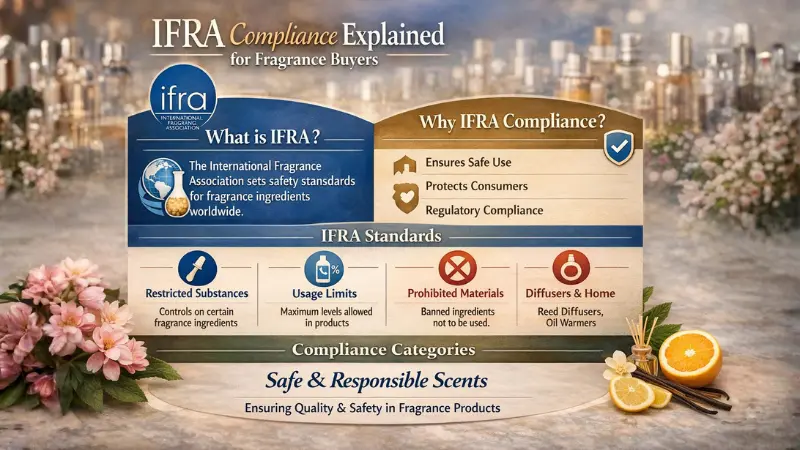
In India, you need proper licenses for cosmetic products. Your fragrances need IFRA compliance. Skipping this creates legal headaches later.
Launch a fragrance line without testing it on real guests first? You're gambling. What you love in the lab might overwhelm people in an enclosed treatment room.
Always do a 60-90 day soft launch in your spa before going retail.
Beautiful packaging costs money. But cheap packaging kills premium positioning. Find the balance. Start with simple, elegant designs. Upgrade as you scale.
Unless you're a trained perfumer, don't try to create fragrances in your kitchen. Work with professionals who understand fragrance oil vs essential oil differences and can guide formulation.
This comes up every single time. "Should my wellness fragrances be 100% natural?"
Here's the honest answer: it depends.
Pure natural essential oils have therapeutic benefits and marketing appeal. But they're expensive, inconsistent, and some (like citrus oils) can cause skin sensitivity.
Quality synthetic fragrance ingredients are:
Many successful wellness brands use a hybrid approach. Core therapeutic oils are natural. Supporting notes use safe synthetics. Nobody can tell the difference, and the product performs better.
Want to understand this better? Read about natural vs synthetic fragrances to make informed decisions.
This is where math meets psychology.
Your cost structure typically looks like:
So if your manufacturing cost is ?100 per unit, you need to retail at ?400-500 to make it work.
Price too low and you can't sustain the business. Price too high and you're competing with international luxury brands that have huge marketing budgets.
Smart Pricing Strategy: Position your spa retail products at 20-30% below commercial spa brands but 50-100% above mass market products. You're premium but accessible.
Having great products is half the battle. Getting them into customer hands is the other half.
Sample Everything: Let guests experience products during treatments. A 5ml sample of your signature massage oil costs ?20 and converts 30% of recipients into buyers.
Retail Display: Create an appealing retail corner in your reception. Not a dusty shelf—a proper display with testers.
Bundle Deals: "Take home the relaxation" package: massage oil + candle + room spray at 15% off.
Collaborate: Partner with yoga studios, meditation centers, boutique hotels. Supply them with your fine fragrances for their spaces.
Online Presence: Your website should have an e-commerce section. Instagram works incredibly well for fragrance products. Show the experience, not just the bottle.
Corporate Gifting: Wellness gift sets are huge for corporate Diwali gifting. One spa owner I know makes 40% of annual retail revenue in October-November from corporate orders.
Wholesale: Once you have traction, approach premium lifestyle stores. Start local, then expand.
The Indian market has distinct seasonal fragrance preferences:
Summer (March-June): Light, fresh, cooling scents. Think mint, cucumber, aquatic notes. Your fabric fragrances and room sprays will sell well.
Monsoon (July-September): Earthy, grounding aromas. Vetiver, patchouli, wet earth. Candles become popular as people stay indoors.
Festival Season (October-November): Warm, spicy, traditional. Sandalwood, rose, jasmine. Perfect for gift sets. Check out this seasonal fragrance guide for more insights.
Winter (December-February): Rich, comforting scents. Cinnamon, vanilla, woody notes. Bath products and massage oils peak.
Plan your product launches and promotions around these patterns.
The biggest success story I know is Tranquil Touch in Pune. Started with one spa in 2018. Developed three signature fragrances within the first year.
By 2020, their product line was generating more revenue than services. In 2022, they franchised. Today, 12 franchise locations across Maharashtra, and every single one sells their proprietary fragrance line.
The founder told me the key was consistency. Every franchise location uses the exact same fragrances. Walk into any Tranquil Touch anywhere, and it smells exactly the same. That's powerful branding.
They worked with established perfume manufacturers in India to ensure quality control as they scaled.
The Lesson: If you plan to scale, build your fragrance identity from day one. It becomes your most valuable asset.
Let's talk practical details that often get overlooked:
Fragrances in different products have different lifespans:
Work with your manufacturer to add natural preservatives and antioxidants to extend shelf life without compromising the "natural" positioning.
Nothing frustrates customers more than their favorite product smelling different next time. Insist on batch testing and consistency protocols from your manufacturer.
Beautiful glass bottles are Instagram-worthy but break in transit and bathrooms. For massage oils and lotions, consider quality plastic with pumps. Save glass for luxury candles and display items.
You can't do this alone. Here's who you need:
Fragrance Consultant: Either hire a professional perfumer or partner with a manufacturer that provides this service.
Product Photographer: Bad product photos kill online sales. Invest in professional photography.
Compliance Expert: Someone who understands cosmetic regulations, labeling requirements, and safety testing.
Marketing Person: Either hire or outsource. You need someone focused on selling your products, separate from spa operations.
How do you know if your fragrance line is working?
Track these metrics:
Retail Conversion Rate: What percentage of spa guests buy products? Aim for 20-30%.
Average Transaction Value: Are people buying just one item or bundling? Bundles mean higher perceived value.
Repeat Purchase Rate: This is the big one. If 40%+ of customers repurchase within 6 months, you've created something special.
Product-to-Service Revenue Ratio: Successful spa brands eventually reach 30-50% of revenue from products.
Guest Feedback: Simple question after each treatment: "Would you like to take this fragrance home?" Yes/no ratio tells you everything.
Ready to start? Here's your 90-day plan:
Days 1-30: Research and Planning
Days 31-60: Development
Days 61-90: Soft Launch
Day 91+: Official Launch
Building a fragrance line for your wellness or spa brand isn't just about creating nice-smelling products. It's about bottling the experience you've created and letting customers take it home.
Start small. Test thoroughly. Listen to your guests. Partner with experts who understand wellness fragrances.
The spa owners who succeed with fragrance lines all share one thing: they stayed true to their brand identity. They didn't chase trends. They created scents that authentically represented what their spa stands for.
Your signature scent is already in your spa right now. You just need to capture it, refine it, and share it with the world.
How much does it cost to develop a custom fragrance line for a spa?
Initial development typically costs ?2-5 lakhs including fragrance creation, testing, and small batch production. Minimum order quantities usually start at 500-1000 units per product. Working with experienced fragrance manufacturers can help optimize costs.
Should spa fragrances be alcohol-free?
For products applied to skin like massage oils and lotions, yes. For room fragrances and perfumes, alcohol can be used. Many spas prefer alcohol-free perfumes to avoid irritation with sensitive clients.
How long does it take to develop a signature spa fragrance?
From concept to final product, expect 3-6 months. This includes initial consultations, creating samples, testing in your spa, adjustments, finalizing formulas, and first production run.
Can I use my spa fragrances in multiple product types?
Yes, a well-developed fragrance can be adapted for candles, diffusers, lotions, massage oils, and soaps. However, concentration and formulation need adjustment for each product type.
What certifications do I need to sell spa fragrance products in India?
You need cosmetic product licenses from respective state authorities, IFRA compliance for fragrances, and proper labeling following BIS standards. Your manufacturer should guide you through this process.
How do I price my products competitively?
Retail price should be 4-5x your manufacturing cost to cover all expenses and profit margins. Research competitor pricing and position yourself as premium-accessible, not mass market but not ultra-luxury unless your spa positioning supports it.
Ready to create your signature wellness fragrance line? Contact us to discuss how we can help bring your vision to life. With over 35 years of experience in fragrance manufacturing, we've helped countless wellness brands develop their unique scent identities.
Partner with JK Aromatics for innovative fragrance solutions that elevate your brand and delight your customers. Our team of experts is ready to bring your vision to life.