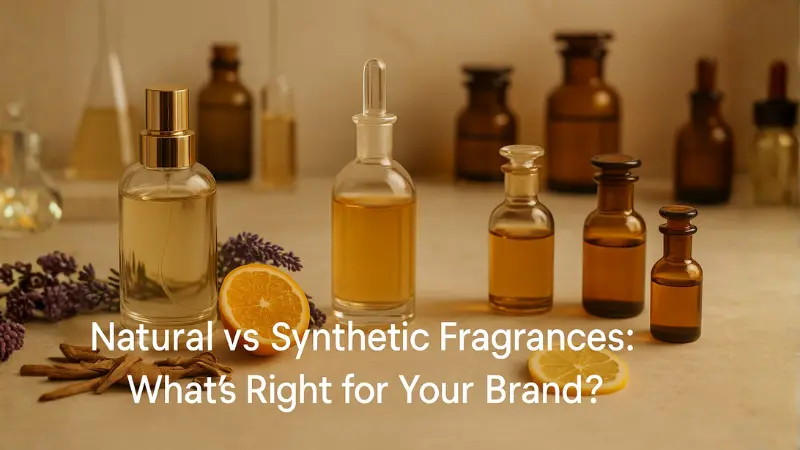
You're launching a new product line—maybe it's luxury soaps, scented candles, or a signature perfume. Then comes the big question: should you go natural or synthetic with your fragrances?
It's not as simple as "natural equals good, synthetic equals bad." Both have their place, and the right choice depends on what you're building, who you're selling to, and what your budget looks like.
Let me break it down for you.
Natural fragrances come straight from nature. We're talking about essential oils extracted from flowers, fruits, leaves, bark, and roots. Think lavender oil from lavender fields or rose absolute from thousands of rose petals.
These ingredients are processed through methods like steam distillation, cold pressing, or solvent extraction. The result? Pure, plant-based scents that smell exactly like their source.
If you've ever walked past a garden in full bloom and thought "I wish I could bottle this," that's the magic of natural fragrances.
Synthetic fragrances are created in labs. Chemists use both natural and artificial ingredients to design scents that might not even exist in nature—like "fresh laundry" or "ocean breeze."
Don't let the word "synthetic" scare you. Many synthetic ingredients are identical to natural ones at a molecular level. Some are even safer because they're free from allergens found in natural extracts.
Big perfume houses use synthetics to create consistent, long-lasting, and affordable fragrances. They're also behind some of the most iconic scents you know.
Let's get into what actually matters when you're choosing between the two.
Natural fragrances are expensive. Really expensive. It takes about 250 pounds of rose petals to make one ounce of rose oil. That's why natural perfumes can cost hundreds of dollars per bottle.
Synthetic fragrances are way more affordable. They can be produced in large batches without depending on harvest seasons or weather conditions. For brands working with tight margins, this is huge.
Natural fragrances vary. Lavender harvested in France might smell different from lavender grown in Bulgaria. Weather, soil, and harvest timing all affect the scent. If you need exact replication batch after batch, naturals can be tricky.
Synthetic fragrances offer perfect consistency. Once a formula is locked in, you can reproduce it endlessly without variation. For brands building a signature scent, this reliability is gold.
Natural fragrances are limited to what exists in nature. You can't extract "strawberry" or "chocolate" essential oils because these scents don't survive distillation. Many fruity and gourmand notes simply aren't available naturally.
Synthetic fragrances have no limits. Want a scent that smells like rain on concrete? Or fresh-baked cookies? Synthetics can do that. The creative possibilities are endless.
Natural fragrances fade faster. Essential oils are volatile and evaporate quickly, especially citrus notes. A natural perfume might last 2-3 hours on skin.
Synthetic fragrances can last all day. Chemists design molecules that cling to skin and fabric longer. If your customers want all-day fragrance, synthetics usually win.
This one's complicated.
Natural fragrances seem eco-friendly, but they're not always sustainable. Overharvesting sandalwood and rosewood has led to endangered species. Some flowers require tons of water to grow. And the carbon footprint of shipping jasmine from Egypt or vanilla from Madagascar adds up.
Synthetic fragrances don't deplete natural resources, but their production can involve petrochemicals and generate chemical waste. However, modern labs are getting better at green chemistry.
The truth? Neither option is automatically "greener." It depends on sourcing practices and production methods.
Natural fragrances contain complex mixtures of compounds, some of which are known allergens. Citrus oils can cause photosensitivity. Cinnamon oil can irritate skin. "Natural" doesn't always mean "gentle."
Synthetic fragrances can be formulated without common allergens. Many brands actually use synthetics to create hypoallergenic products. That said, some synthetic ingredients do cause reactions in sensitive individuals.
Both need proper safety testing before going into cosmetics fragrances or soap fragrances.
Go natural if:
Your brand positioning is premium and eco-conscious. Customers looking for clean beauty, organic products, or wellness items expect natural ingredients. They'll pay more for them too.
You're targeting the aromatherapy market. Only natural essential oils offer the therapeutic benefits associated with aromatherapy. Lavender oil genuinely helps with relaxation. Synthetic lavender smells nice but doesn't have the same properties.
Authenticity matters more than price. If you're creating artisan products where the story behind ingredients adds value, natural is the way to go.
Your product category demands it. Some markets—like high-end spa products or natural skincare—won't accept synthetics. Your customers expect purity.
Go synthetic if:
You need cost-effective scaling. If you're producing detergent fragrances or fabric fragrances for mass market, synthetics make financial sense.
Consistency is non-negotiable. Brands with signature scents can't afford variation between batches. Think about walking into your favorite store—you expect it to smell the same every time.
You want creative freedom. Building a unique scent profile with fruity, gourmand, or aquatic notes? You'll need synthetics to achieve that.
Longevity matters to your customers. Fine fragrances and perfumes that last all day typically rely on synthetic molecules for staying power.
You're working with sensitive formulations. Synthetics can be hypoallergenic and safer for products like baby detergents or sensitive skin cosmetics.
Here's what many smart brands are doing—they're blending natural and synthetic ingredients.
You might use natural lavender and bergamot for the top notes (the first impression), then add synthetic musks and woody notes for the base (longevity and depth). This gives you authenticity where it counts and performance where you need it.
Many fragrance manufacturers in India specialize in these hybrid formulations. They understand that modern consumers want products that smell amazing, last long, AND have some natural credentials.
It's not about picking a side. It's about picking what works for your specific product and market.
Quick clarification because this confuses people:
Essential oils are always natural. They're concentrated plant extracts with therapeutic properties.
Fragrance oils can be natural, synthetic, or a blend. They're designed purely for scent, not aromatherapy benefits.
For a deeper dive into this topic, check out our detailed guide on fragrance oil vs essential oil.
Let's talk money.
Natural rose oil can cost $1,000 to $5,000 per kilogram depending on quality and source. Synthetic rose-like compounds? Maybe $50 to $200 per kilogram.
For a brand making 10,000 units of soap, that difference adds $5 to $50+ per unit if you go fully natural. That's the difference between a $10 soap bar and a $60 luxury bar.
Your pricing strategy needs to support your ingredient choices.
Both natural and synthetic fragrances must comply with safety regulations. In India, the Bureau of Indian Standards (BIS) sets guidelines for fragrance use in various products.
Natural doesn't mean unregulated. Essential oils still need IFRA (International Fragrance Association) compliance documents showing they're safe at specific usage levels.
Working with experienced perfume manufacturers in India ensures your formulations meet all regulatory requirements, whether you choose natural, synthetic, or hybrid.
Before choosing your fragrance direction, ask yourself:
What's my brand story? If your brand is built on purity and nature, synthetics might contradict your message. If you're about innovation and performance, synthetics align perfectly.
Who's my target customer? Young, price-conscious shoppers might not care about natural vs synthetic. Wellness-focused customers with bigger budgets definitely will.
What's my product category? Candle fragrances can work beautifully with synthetics. Spa products usually demand naturals.
What's my budget? Be realistic. Natural ingredients cost more upfront and create pricing pressure downstream.
Do I need therapeutic claims? If yes, you must use natural essential oils. Synthetic "lavender scent" can't legally claim to help with sleep or anxiety.
How important is scent longevity? If customers expect all-day performance, synthetics usually deliver better.
Whether you choose natural, synthetic, or hybrid fragrances, partnering with the right manufacturer makes all the difference.
Look for manufacturers who:
Top perfume manufacturers in Delhi NCR and Noida have the expertise to guide your fragrance decisions based on your specific needs.
There's no universal "right" answer to natural vs synthetic fragrances.
Natural fragrances bring authenticity, complexity, and therapeutic benefits—but they cost more and perform inconsistently.
Synthetic fragrances offer affordability, consistency, creative freedom, and longevity—but they might not align with clean beauty positioning.
Most successful brands land somewhere in the middle, using each type where it makes the most sense.
Your choice should reflect your brand values, target market, product category, and business model. Don't let anyone tell you one is automatically better than the other.
Choosing between natural and synthetic fragrances is just the first step. The next step is working with fragrance experts who understand your vision and can bring it to life.
At JK Aromatics, we specialize in both natural and synthetic formulations across multiple product categories—from incense sticks to detergent soaps.
Whether you need private label fragrance manufacturing or custom scent development, we'll help you make the right choice for your brand.
Contact us today to discuss your fragrance needs and get expert guidance on natural vs synthetic options for your product line.
Are natural fragrances always better than synthetic ones?
Not necessarily. Natural fragrances offer authenticity and potential therapeutic benefits, but they're more expensive, less consistent, and can contain allergens. Synthetic fragrances provide better longevity, consistency, and affordability. The "better" choice depends on your brand positioning and product needs.
Can synthetic fragrances be safe for skin?
Yes, absolutely. Many synthetic fragrances are specifically formulated to be hypoallergenic and free from common irritants found in natural extracts. Both natural and synthetic ingredients must pass safety testing before being used in cosmetics or personal care products.
Why do natural perfumes fade faster?
Natural essential oils are highly volatile, meaning their molecules evaporate quickly. Citrus notes especially disappear within hours. Synthetic fragrance molecules can be engineered to bind better to skin and evaporate more slowly, giving longer-lasting scent.
Are synthetic fragrances bad for the environment?
It's complicated. While synthetic production can involve petrochemicals, it doesn't deplete natural plant populations or require massive amounts of water and land. Some natural ingredient harvesting is actually less sustainable due to overharvesting and high resource use. Modern synthetic production is increasingly adopting green chemistry practices.
Can you mix natural and synthetic fragrances?
Yes, and many brands do exactly this. Hybrid formulations combine the authenticity of natural top notes with the longevity and creativity of synthetic base notes. This approach balances performance, cost, and natural credentials effectively.
What's more expensive: natural or synthetic fragrances?
Natural fragrances are significantly more expensive. Pure essential oils like rose or jasmine can cost 10 to 100 times more than synthetic alternatives. This cost difference directly impacts your product pricing and profit margins.
Do customers really care about natural vs synthetic?
It depends on your market. Wellness-focused, eco-conscious consumers actively seek natural ingredients and will pay premium prices. Mass-market consumers typically prioritize scent quality and price over ingredient source. Know your target audience.
How do I know if a "natural" fragrance is really natural?
Ask for documentation. Legitimate natural fragrances come with certificates of analysis showing botanical sources and extraction methods. Be wary of vague claims. True natural fragrances should list specific essential oils and plant extracts, not just "natural fragrance" or "parfum."


Partner with JK Aromatics for innovative fragrance solutions that elevate your brand and delight your customers. Our team of experts is ready to bring your vision to life.