You know that feeling when you pull fresh laundry out of the dryer and it smells incredible?
And then two days later, it just... doesn't?
Yeah, that's frustrating.
Whether you're doing laundry at home or running a detergent brand, one thing's clear: people want their clothes to smell fresh for longer. Not just for a few hours. Not until they walk out the door. But days after washing.
So what actually makes a fragrance stick around in fabric? Why do some detergents and fabric softeners leave your clothes smelling amazing all week, while others fade before the clothes even finish drying?
Let me break it down for you.
Fresh-smelling clothes aren't just nice to have. They're part of how we feel confident, clean, and put-together.
Think about it. You grab a shirt from your closet. It smells fresh, clean, maybe a little floral or citrusy. You feel good wearing it.
Now imagine the opposite. You put on a shirt and it smells... like nothing. Or worse, a little musty.
That's the difference a good laundry fragrance makes.
And if you're manufacturing detergents, fabric softeners, or laundry care products, your fragrance is your biggest selling point. People will switch brands just because something smells better.
Okay, let's get into the science—but I'll keep it simple.
Fragrance doesn't just sit on fabric. It needs to bond with the fibers, resist washing and heat, and slowly release over time. That's harder than it sounds.
Here's what makes it work.
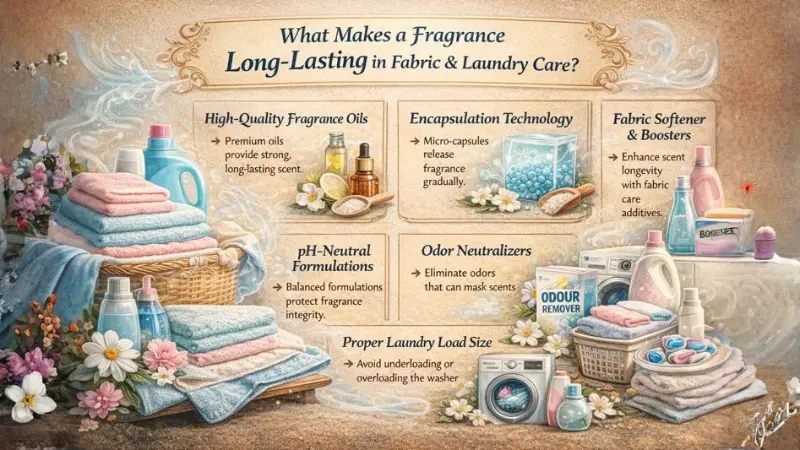
Not all fragrance oils are the same.
Cheap, low-quality oils fade fast. They might smell good in the bottle, but once they're mixed into detergent or fabric softener, they don't last.
High-quality oils are formulated to be more stable. They're designed to handle heat, water, and friction without breaking down.
JK Aromatics & Perfumers creates fabric fragrances that are specifically made to last through washing, drying, and wearing. That's the kind of quality you need if you want results.
More fragrance doesn't always mean better scent. But concentration does matter.
If the fragrance is too diluted, it won't survive the wash. If it's too concentrated, it can become overpowering or irritating.
The sweet spot? Enough to stick to the fabric without being too much.
Professional manufacturers know how to balance this. They test different concentrations to find what works best for each product type.
Here's where things get interesting.
Fixatives are ingredients that help fragrance molecules stick to fabric fibers. They slow down evaporation, which means the scent lasts longer.
Encapsulation is even cooler. Fragrance molecules are wrapped in tiny protective shells. When you move or rub the fabric, these shells break open and release fresh bursts of scent.
That's why some clothes smell fresh even days after washing—especially when you're wearing them.
Detergent and fabric softener work differently.
Detergent:
It cleans, which means it rinses off. Most of the fragrance goes down the drain unless it's specifically designed to bond with fabric.
Fabric Softener:
This is made to coat the fabric fibers. That coating helps fragrance stick around longer. That's why clothes washed with fabric softener tend to smell better than those washed with detergent alone.
Detergent with Built-In Softener:
Some detergents combine both. These are formulated to clean and leave a lasting scent.
If you're choosing products for your business, you need detergent fragrances that are built to last—not just smell good for five minutes.
Hot water breaks down fragrance faster. Cold water helps it last.
Also, the type of washing machine matters. Front-loaders use less water, which can help fragrance stick better. Top-loaders use more water, which dilutes everything.
And then there's drying. High heat in the dryer can kill fragrance. Air-drying or low heat helps preserve it.
Cotton, polyester, silk—they all hold fragrance differently.
Natural fibers like cotton absorb fragrance well but also release it faster. Synthetic fibers like polyester don't absorb as much, but they can hold onto scent longer once it's there.
Blended fabrics? Somewhere in the middle.
A good fragrance is formulated to work across different fabric types, not just one.
Let's talk about what kills fragrance in laundry.
More soap doesn't mean cleaner or better-smelling clothes. In fact, it can leave residue that traps odors.
Stick to the recommended amount.
When the machine's too full, clothes don't rinse properly. Detergent and fragrance get trapped in the fibers instead of distributing evenly.
If you leave damp clothes in the washer for hours, they start to smell musty. No fragrance can fix that.
Dry them as soon as the cycle's done.
Cheap detergents often use cheap fragrances. They smell okay at first but fade fast or smell artificial.
Investing in quality products—or sourcing quality fragrances if you're a manufacturer—makes a huge difference.
Whether you're doing laundry at home or formulating products, here's how to get the most out of your fragrance.
Different scents appeal to different people. Here's what's popular right now.
Scents like fresh linen, ocean breeze, and crisp cotton. These are classics that never go out of style.
Lavender, jasmine, rose. Soft, comforting, and feminine.
Citrus, apple, berry. Bright and energizing.
Eucalyptus, mint, basil. Clean and refreshing.
Sandalwood, cedarwood. Warm and sophisticated.
Vanilla, honey. Cozy and inviting.
The key is offering variety. Not everyone wants the same scent on their clothes.
At JK Aromatics & Perfumers, you'll find a wide range of fragrance options that cover all these categories and more.
If you're developing laundry products, you can't just guess. You need to test.
Here's a simple process:
This gives you real data on how your fragrance performs.
There's a lot of debate about natural vs. synthetic fragrances.
Natural fragrances come from plant extracts and essential oils. They smell authentic but can be less stable and more expensive.
Synthetic fragrances are created in labs. They're more consistent, longer-lasting, and cost-effective.
The truth? Most high-performing laundry fragrances use a blend of both. You get the natural appeal with the durability of synthetics.
If you want to learn more about this, check out this guide on natural vs. synthetic fragrances.
Some brands nail it. Their products smell amazing and the scent lasts for weeks.
Others? The fragrance is gone before the clothes are even dry.
What the good ones do:
What the bad ones do:
If you're building a brand, aim for the first list.
Your fragrance supplier can make or break your product.
Here's what you should expect:
JK Aromatics & Perfumers specializes in creating detergent and fabric fragrances that actually perform. They understand the science behind what makes scents last and work with brands to develop products people love.
You can explore their offerings or get in touch to discuss your specific needs.
The industry's changing. Here's what's happening right now.
People want products that are safe for the environment and their families. That means biodegradable ingredients, less plastic packaging, and natural scents.
More people have sensitive skin. Fragrance-free or hypoallergenic products are growing in demand.
Consumers are willing to pay more for luxury scents. Think hotel-quality freshness or designer fragrance-inspired options.
Encapsulation and advanced fixatives are becoming standard, not a premium feature.
Some brands are letting customers choose or create their own scent blends.
At the end of the day, people remember how their clothes smell.
You can have the best cleaning formula, the most attractive packaging, the smartest marketing. But if the fragrance doesn't last, people won't buy again.
Fragrance is what makes laundry care personal. It's what makes people feel good about the products they use.
So whether you're choosing products for your home or developing them for a brand, don't settle for anything less than quality.
Work with manufacturers who understand the science. Test your products. Listen to customer feedback.
And if you're serious about creating laundry care products that people actually love, start with the right fragrance partner.
Check out what JK Aromatics & Perfumers can do for your brand. They've got the expertise, the range, and the commitment to quality that makes all the difference.
Because fresh-smelling clothes aren't just a nice extra. They're what your customers expect—and deserve.
Q: Why does my laundry smell fade so quickly?
A: Usually because of low-quality fragrance oils, too much detergent, or washing in very hot water. Using fabric softener and drying on low heat helps fragrance last longer.
Q: What's the difference between detergent fragrance and fabric softener fragrance?
A: Detergent fragrance mostly rinses away during washing. Fabric softener coats the fibers, which helps scent stick around longer.
Q: Can I make my own scented laundry products?
A: You can add essential oils to unscented detergent, but it won't last as long as professionally formulated products. Commercial products use fixatives and encapsulation that DIY versions don't have.
Q: Are long-lasting fragrances safe for sensitive skin?
A: Most are, but it depends on the ingredients. Look for hypoallergenic or dermatologically tested products. Avoid anything with harsh chemicals or allergens.
Q: How long should laundry fragrance last?
A: A good quality product should keep clothes smelling fresh for at least 7-14 days when stored properly. Premium products with encapsulation can last even longer.
Q: Why do some fabrics hold scent better than others?
A: Natural fibers like cotton absorb fragrance well but release it faster. Synthetics like polyester hold onto scent longer once it bonds. Blended fabrics are in between.
Q: What's encapsulation and why does it matter?
A: Encapsulation wraps fragrance molecules in protective shells that break open with friction. This releases fresh bursts of scent when you move or wear the clothes, making fragrance last longer.
Q: Should I use hot or cold water for better fragrance?
A: Cold water helps preserve fragrance. Hot water breaks it down faster. Wash in cold when possible for longer-lasting scent.
Q: Can I add extra fragrance to my detergent?
A: You can, but it's not always safe or effective. Too much fragrance can irritate skin or damage fabric. It's better to use a detergent with good built-in fragrance or switch to a higher-quality product.
Q: How do I choose a fragrance manufacturer for my laundry brand?
A: Look for expertise in fabric and detergent fragrances, consistency in quality, custom development options, safety certifications, and good customer support. Test samples before committing to bulk orders.
Partner with JK Aromatics for innovative fragrance solutions that elevate your brand and delight your customers. Our team of experts is ready to bring your vision to life.