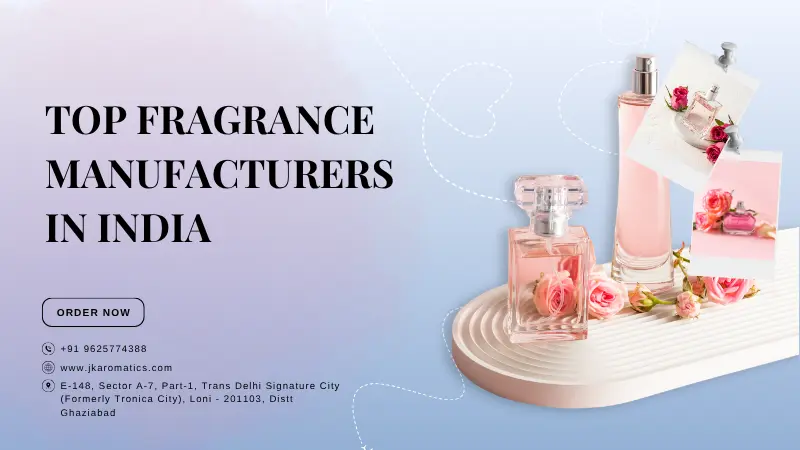
Welcome, fellow scent enthusiasts and brand visionaries! Here at JK Aromatics & Perfumers, we have been immersed in the captivating world of fragrance creation since 1989. For decades, our philosophy, "Creating Sensorial Dreams Since 1989," has guided us in developing high-performance fragrance solutions for a diverse array of industries. We have seen trends emerge and evolve, technologies advance, and consumer expectations reach new heights.
The fragrance market is currently experiencing an exhilarating boom. The global fragrance market size is projected to reach approximately USD 61.4 billion in 2026, with consistent growth expected to USD 89.4 billion by 2033. Other estimates even suggest it could reach nearly USD 65 billion in 2026. This impressive growth is fueled by factors like increasing disposable incomes, the enthusiastic engagement of Gen Z, a shift towards premiumization, and the growing perception of fragrance as an everyday essential rather than just an occasional luxury.
In this vibrant and rapidly expanding landscape, choosing the right fragrance production partner is more critical than ever. It is not just about creating beautiful scents; it's about ensuring your vision can scale effortlessly and reach the market at lightning speed. This comprehensive guide, crafted from our extensive experience, will walk you through the essential considerations for selecting fragrance production services that truly guarantee both scalability and speed.
Why Scalability and Speed Are Non-Negotiable in Today's Market
In a world that moves faster than ever, consumer tastes can pivot in an instant. A hot trend today might be passé tomorrow. For brands, this means that agility in production is not just an advantage, it is a fundamental requirement for survival and success.
The Perils of Slow Production
Imagine your brand has a groundbreaking fragrance concept, perfectly aligned with emerging consumer desires. You have invested in marketing, built anticipation, and generated significant buzz. But then, production lags. This delay can lead to lost sales opportunities, a diminished competitive edge, and ultimately, a frustrated customer base. Slow production can turn a potential triumph into a missed opportunity.
The Importance of Scalable Operations
Similarly, a lack of scalability is a major roadblock to growth. What happens when your product suddenly hits viral status and demand skyrockets? If your production partner cannot rapidly ramp up output without compromising quality, you face stockouts, inconsistent supply, and damage to your brand's reputation. Scalability means your production can flex to meet fluctuating demand, from small, exclusive batches to mass-market volumes, ensuring consistent availability and capitalizing on every growth spurt.
Understanding Your Brand's Fragrance Production Needs
Before you even begin scouting for a production partner, we systematically analyze and advise our clients to gain absolute clarity on their own brand's unique requirements. This introspection is the first crucial step towards finding a perfect match.
Defining Your Vision and Target Market
- Product Type: Are you developing a fine fragrance, a personal care product scent (like lotions or shampoos), or a home care fragrance (candles, diffusers)? Each category has distinct formulation, production, and regulatory considerations.
- Target Audience: Who are you trying to reach? Understanding your demographic helps in defining scent profiles, packaging aesthetics, and even the type of ingredients that resonate most with your consumers.
- Brand Ethos: Does your brand emphasize natural ingredients, sustainability, luxury, or affordability? Your production partner should align with and support these core values.
Assessing Your Production Volume Requirements
Consider your current needs and future aspirations:
- Minimum Order Quantities (MOQs): Many manufacturers have MOQs. Knowing your potential batch sizes, from initial runs to full-scale production, will help you identify partners whose capabilities match your scale.
- Growth Projections: Think about where you want your brand to be in 1, 3, or 5 years. A partner capable of growing with you will save you the hassle and cost of switching manufacturers down the line.
Navigating Regulatory Compliance
The fragrance industry is regulated to ensure consumer safety and environmental responsibility. We cannot stress enough the importance of a partner who lives and breathes regulatory compliance.
- IFRA Standards: The International Fragrance Association (IFRA) sets the global benchmark for the safe use of fragrance ingredients. IFRA Standards define restrictions on specific fragrance ingredients based on hazard and exposure, covering everything from bans to concentration limits across various product categories. Adherence to these standards is not optional; it is essential for preventing issues like skin irritation, allergic reactions, and other adverse effects.
- Regional Regulations: Beyond IFRA, different regions have their own regulatory bodies, such as the EU's cosmetic regulations or the FDA in the United States. Your partner must be adept at navigating these complex landscapes to ensure your products can be legally sold in your target markets.
Key Attributes of a World-Class Fragrance Production Partner
Selecting a partner is like finding a co-creator for your brand's olfactory identity. They must bring a robust combination of expertise, advanced capabilities, and unwavering commitment to quality.
Unparalleled Expertise and Experience
Look for a partner with deep roots and a proven track record. This is where decades of experience truly shine.
- Industry Tenure: A company established for many years, like JK Aromatics & Perfumers since 1989, brings invaluable insights into market dynamics, ingredient sourcing, and manufacturing nuances. We have navigated countless challenges and refined our processes over time.
- Formulation Science: True expertise lies in the scientific art of blending. This includes understanding the complex chemistry of aroma chemicals and natural essential oils, stability testing, and ensuring fragrance longevity and performance across different applications.
- Skilled Personnel: Look for a team comprising expert perfumers, flavorists, chemists, and regulatory specialists. Their collective knowledge forms the backbone of innovative and compliant fragrance development.
Expert Takeaway: Always request detailed profiles of the perfumers and technical staff who will be working on your project. Their individual experience and specialized training directly contribute to the quality and innovation of your fragrance. A truly expert partner will be transparent and proud to showcase their team's credentials.
Advanced Manufacturing Capabilities and Technology
Modern fragrance production demands more than just blending tanks. It requires sophisticated infrastructure.
- State-of-the-Art Facilities: Look for facilities equipped with advanced mixing, filling, and packaging lines. Automation plays a critical role in ensuring precision, efficiency, and consistency, which are vital for both speed and scalability.
- Quality Control Protocols: A world-class partner will have rigorous quality control at every stage, from raw material inspection to final product release. This includes analytical testing for purity, composition, and stability.
- Efficiency-Driven Processes: Efficient manufacturing processes are crucial for quick turnaround times. Ask about their production lead times, batch cycle times, and how they manage production schedules to meet deadlines.
Robust Supply Chain Management
The foundation of consistent, high-quality fragrance production lies in a well-managed supply chain.
- Reliable Sourcing: A strong partner has established relationships with trusted suppliers of aroma chemicals, essential oils, and other raw materials. This ensures consistent quality, ethical sourcing, and competitive pricing.
- Inventory Management: Efficient inventory management prevents delays. Ask about their strategies for managing raw material stock and finished goods to avoid bottlenecks, especially during peak demand. Improving supply chain efficiency is about delivering the right products to customers faster, at lower cost, and with less waste, without compromising service or quality.
- Resilience and Agility: In an unpredictable global market, a resilient supply chain that can adapt to disruptions is vital. A good partner will have contingency plans and diversified sourcing strategies. According to a 2026 report on supply chain, businesses with connected systems, structured supplier oversight, and real-time visibility are better prepared for disruptions.
Commitment to Quality Control and Assurance
Quality cannot be an afterthought; it must be ingrained in every step of the process.
- Certifications: Look for relevant certifications such as ISO 9001 (Quality Management) and Good Manufacturing Practices (GMP). These demonstrate a commitment to internationally recognized quality standards.
- Batch Consistency: A truly skilled manufacturer can replicate a fragrance formulation perfectly, batch after batch, ensuring your customers always receive the product they expect.
Agility and Flexibility for Scalability
The ability to adapt is a hallmark of a great partner.
- Production Capacity: Can they handle both small, bespoke runs and large-scale mass production? A partner with flexible machinery and an adaptable workforce is ideal.
- Prototyping to Production: They should offer seamless transitions from initial concept and prototyping phases to full commercial production, providing guidance and support at each stage.
Transparent Communication and Project Management
Open and honest communication is the cornerstone of any successful partnership.
- Clear Timelines: A good partner provides realistic timelines for development, production, and delivery, and sticks to them.
- Regular Updates: They keep you informed about project progress, potential issues, and proposed solutions.
- Collaborative Approach: They see themselves as an extension of your team, working together to overcome challenges and achieve your goals.
The Process: From Concept to Consumer
We believe in a structured yet flexible approach to bringing your fragrance to life. Here is how a typical journey unfolds with a truly dedicated production partner.
Initial Consultation and Ideation
This is where your vision meets our expertise. We start with in-depth discussions to understand your brand, target audience, and specific fragrance aspirations. This phase often involves brainstorming scent profiles, exploring ingredient options, and discussing market trends.
Formulation and Prototyping
Our expert perfumers then get to work, translating your concept into tangible scent samples. This intricate stage involves:
- Ingredient Selection: Carefully choosing the right aroma chemicals and natural extracts that align with your brief, regulatory requirements, and budget.
- Blending and Testing: Crafting initial prototypes, which then undergo rigorous testing for stability, performance, and adherence to IFRA Standards.
- Feedback Loop: We collaborate closely with you, iterating on samples based on your feedback until the perfect scent is achieved.
Scaling Up for Production
Once the formulation is perfected and approved, the transition to production begins.
- Pilot Batches: Smaller production runs are often conducted first to fine-tune processes and confirm quality before full-scale manufacturing.
- Manufacturing: Utilizing advanced machinery and stringent quality control, your fragrance is produced efficiently and consistently.
- Quality Assurance: Every batch undergoes comprehensive quality checks to ensure it meets the highest standards and matches the approved golden sample.
Packaging, Filling, and Logistics
The journey does not end with the creation of the juice. A full-service partner handles the entire process.
- Component Sourcing: Assisting with sourcing bottles, caps, pumps, and outer packaging that reflect your brand's aesthetic and functional needs.
- Filling and Assembly: Automated and semi-automated filling lines ensure precise and efficient packaging of your product.
- Logistics: Managing storage, shipping, and distribution to get your finished products into the hands of your customers, on time and intact.
Comparing Production Service Models
When considering your options, it is helpful to weigh the advantages of different production models. We often see brands grappling with the choice between building their own facilities versus partnering with a specialist like us.
In-House vs. Contract Manufacturing
Let's look at a quick comparison to highlight the benefits of specialized contract manufacturing for brands focused on scalability and speed:
| Feature |
In-House Production |
Contract Manufacturing (e.g., JK Aromatics & Perfumers) |
| Initial Investment |
High, requiring significant capital for facilities, equipment, R&D labs, and staff. |
Low, as you leverage the existing infrastructure, technology, and expertise of the partner. |
| Expertise Access |
Limited to your internal team's knowledge, which may require ongoing training and recruitment. |
Broad access to specialized perfumers, chemists, regulatory experts, and supply chain managers. |
| Scalability |
Limited by your own capacity, making it challenging to rapidly scale up or down based on demand fluctuations. |
High, with the ability to adjust production volumes quickly without substantial overhead costs. |
| Speed to Market |
Often slower due to setup times, hiring processes, and the need to develop internal R&D and production protocols. |
Faster, as partners have established processes, readily available resources, and efficient workflows. |
| Focus |
Diverts significant management time and resources from your core business of brand building and marketing. |
Allows your brand to concentrate solely on product innovation, marketing, and sales strategies. |
| Risk |
Higher operational, market, and regulatory compliance risks, as responsibilities are solely internal. |
Shared or mitigated by the partner's extensive experience, compliance knowledge, and established risk management protocols. |
| Technology & Innovation |
Requires continuous investment in new technologies and keeping up with industry advancements. |
Partners often have cutting-edge equipment and stay updated on the latest innovations in fragrance science and production. |
As you can see, for brands prioritizing agility, reduced overhead, and rapid market entry, partnering with an experienced contract manufacturer offers a clear strategic advantage.
Evaluating Potential Partners: What to Ask and Look For
Finding the right fit requires thorough due diligence. Here is a checklist of critical areas to explore when evaluating potential fragrance production partners.
Due Diligence Checklist
- Client References and Testimonials: Ask for references from current and past clients. Hearing directly from other brands about their experiences can provide invaluable insights into a partner's reliability, quality, and communication.
- Facility Visits: If possible, conduct a physical or virtual tour of their manufacturing facility. This allows you to observe their operations, cleanliness, technology, and adherence to safety protocols firsthand.
- Certifications and Compliance: Request copies of their relevant certifications (e.g., ISO, GMP) and inquire about their specific procedures for ensuring IFRA and regional regulatory compliance. How do they handle documentation and updates?
- Lead Times and MOQs: Get clear answers on their typical lead times for new product development and production runs. Understand their Minimum Order Quantities and how flexible they are for both initial orders and future scaling.
- Pricing Structure: Discuss their pricing models transparently. Understand what is included (e.g., formulation, testing, packaging support) and what might incur additional costs.
- Disaster Recovery and Contingency Plans: In today's volatile environment, inquire about their plans for managing unexpected disruptions, such as raw material shortages or natural disasters.
The Importance of a Cultural Fit
Beyond technical capabilities, a successful partnership often hinges on alignment in values and communication styles. We believe in fostering long-term relationships built on trust and mutual respect.
- Collaborative Spirit: Do they view you as just another client, or a true partner? A collaborative spirit ensures both parties are invested in the success of the project.
- Transparency: Look for a partner who is open about their processes, challenges, and solutions.
- Responsiveness: How quickly do they respond to your inquiries? Prompt and clear communication is crucial for maintaining project momentum.
Expert Takeaway: Pay close attention during initial meetings to how a potential partner addresses your challenges. Do they offer generic solutions, or do they demonstrate a deep understanding of your specific needs and propose tailored strategies? A partner who asks insightful questions and provides thoughtful, customized answers is more likely to be a good long-term fit for your brand's growth trajectory.
Our Commitment to Your Brand's Success
At JK Aromatics & Perfumers, we understand that choosing a fragrance production partner is a significant decision. For over three decades, our dedication to the art and science of scent creation has made us a trusted name in B2B fragrance solutions. We live by our philosophy, "Creating Sensorial Dreams Since 1989," not just as a motto, but as a commitment to excellence.
We pride ourselves on providing not just manufacturing services, but a comprehensive partnership that spans ideation, development, rigorous quality control, and seamless logistics. We have built our reputation on our ability to deliver high-quality, compliant fragrances with the scalability and speed that modern brands demand. Our state-of-the-art facilities, expert team, and robust supply chain are all geared towards ensuring your sensorial dreams become a market reality, quickly and efficiently.
Conclusion
The fragrance market is an exciting space, brimming with innovation and opportunity. To truly thrive, brands need more than just a great idea; they need a production partner who can translate that idea into a tangible, scalable, and high-quality product, delivered to market with speed and precision.
We have systematically analyzed the critical elements that contribute to a successful fragrance production partnership, from understanding your brand's unique needs to evaluating a partner's expertise, capabilities, and commitment to quality and compliance. By prioritizing factors like adherence to IFRA Standards and a robust, efficient supply chain, you are setting your brand up for sustained success in this dynamic industry.
Choosing wisely means securing a partner who acts as an extension of your team, dedicated to turning your olfactory vision into a commercially successful reality. With the right partner by your side, your brand is not just ready for 2026, it is ready for the future of fragrance.