
In the dynamic and ever-evolving landscape of global manufacturing, optimizing operational efficiency is paramount. For businesses whose products enchant through scent – from luxurious personal care items and invigorating home fragrances to high-performance industrial solutions – the strategic sourcing of bulk fragrance oils represents a critical lever for both cost reduction and product differentiation. As JK Aromatics & Perfumers, a heritage fragrance house "Creating Sensorial Dreams Since 1989," we systematically analyzed the intricacies of the B2B fragrance market to deliver this comprehensive guide for 2026. We aim to equip you, our valued partners in FMCG, personal care, home care, and industrial manufacturing, with the knowledge to achieve significant cost savings without compromising on the olfactory excellence that defines your brand.
The global B2B fragrance product market is a substantial and growing sector, projected to reach USD 34.3 billion by 2035, driven by increasing demand in personal care, home care, and innovative scent marketing strategies. Navigating this market requires an informed approach, especially concerning the procurement of high-quality fragrance oils. We understand that your fragrance is often the first, and most lasting, impression of your product, making the interplay of cost, quality, and compliance in fragrance sourcing crucial for brand reputation and consumer satisfaction.
The fragrance industry is experiencing profound shifts, driven by a confluence of consumer demand, regulatory changes, and global economic factors. Understanding these undercurrents is the first step toward a robust procurement strategy.
Today's consumers are more discerning than ever. They seek scents that are not just unique but also cleaner, safer, and kinder to both the individual and the planet. This translates into a growing demand for transparency in ingredients, a preference for natural essential oils, organic botanical extracts, and responsibly sourced raw materials. We are witnessing a clear move away from overly synthetic profiles towards formulas crafted with an emphasis on sustainability. Brands that prioritize ethical sourcing, sustainable production, and eco-friendly packaging will gain a competitive advantage as consumer demand for such products continues to grow. The rise of niche and artisanal fragrances also underscores a desire for individuality and unique scent profiles over mass appeal, pushing brands to innovate and differentiate.
Fragrance remains one of the most regulated and scrutinized components in cosmetic and consumer product formulation. As consumer sensitivity awareness increases and analytical detection improves, regulators have shifted toward precise, compound-level control. The International Fragrance Association (IFRA) Standards, particularly Amendments 51 and 52, are the universally enforced backbone of fragrance safety. Although not laws, IFRA Standards are mandatory for market access, influencing how fragrances are formulated, labeled, documented, and marketed.
In addition to IFRA, manufacturers must navigate frameworks such as the European Union's expanded fragrance allergen labeling rules under Regulation (EU) 2023/1545 (with mandatory compliance for new EU products by July 2026) and the United States Modernization of Cosmetics Regulation Act (MoCRA). MoCRA introduces significant updates to U.S. cosmetic oversight, strengthening FDA authority over safety substantiation, labeling accuracy, and adverse event reporting, requiring comprehensive safety evidence and allergen disclosures. Beyond these, specific product categories, like air care, face Volatile Organic Compound (VOC) regulations, such as those implemented by the California Air Resources Board (CARB), which affect fragrance formulations to reduce emissions.
The fragrance industry's supply chain is increasingly complex and prone to disruption. Prices of raw materials, especially natural essential oils and extracts, are highly volatile due to factors such as weather conditions, crop yields, and global supply chain disruptions. Geopolitical tensions, tariffs, and inflation further exacerbate price instability and impact operational efficiency. This complexity extends to SKU expansion and packaging diversity, requiring robust supply chain management to ensure continuous product availability and consistent quality.
To navigate these complexities and maximize margins, a multi-faceted approach to bulk fragrance oil procurement is essential.
The foundation of any successful fragrance product lies in the unwavering quality and consistency of its fragrance oils. We emphasize that quality control (QC) in fragrance manufacturing is a systematic process, inspecting every step from raw material arrival to the finished product.
Compliance is not merely a legal obligation; it's a cornerstone of trustworthiness and market access. A compliant manufacturer will provide IFRA certificates for all fragrance compounds, ensuring every component meets stringent safety requirements.
The true cost of a fragrance oil extends beyond its per-kilogram price; it encompasses its concentration, stability within your specific product base, and long-term performance. Expertise in formulation ensures that the fragrance performs optimally across diverse applications, preventing issues like discoloration, separation, or loss of scent intensity.
We work as formulation partners, deeply understanding the technical requirements of various product categories:
Achieving cost efficiency in bulk fragrance oil sourcing is not about finding the cheapest supplier, but about optimizing every facet of your procurement and formulation strategy.
One of the most effective ways to lower overall procurement expenses is to consolidate multiple fragrance oil orders into larger shipments. By planning purchases strategically and ordering multiple fragrance categories together, you can significantly reduce transportation, customs clearance, and handling costs per kilogram. Suppliers often offer discounted rates for larger order volumes, leading to lower unit prices. Building long-term relationships with reliable suppliers ensures consistent supply, competitive pricing, and a partner who can support your growth with flexible minimum order quantities (MOQs).
Fragrance optimization is an often-overlooked cost-saving opportunity. Our experienced R&D teams can tailor fragrance formulations to specific product applications, helping you achieve excellent scent performance while minimizing dosage requirements. This includes:
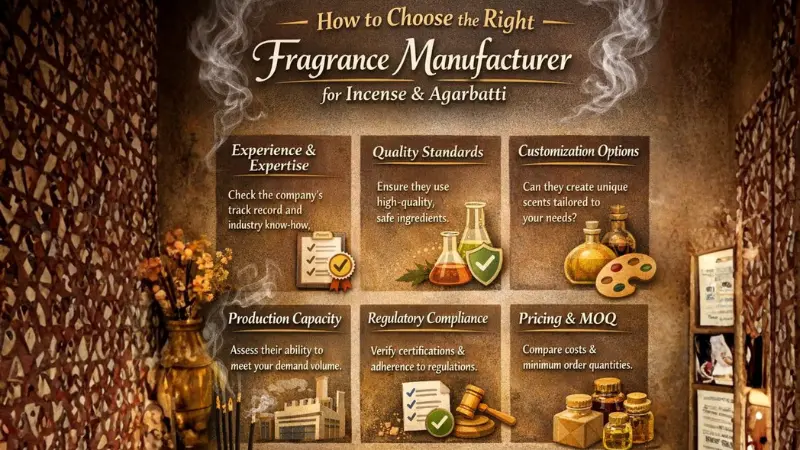
Choosing the right fragrance partner is perhaps the most critical decision in your procurement strategy. It’s not just about selecting a supplier; it’s about choosing a guardian for your brand's reputation and your customers' safety. Key factors to consider during vendor selection include:
The value of a fragrance partner extends significantly beyond product delivery. Collaborative development, where your team works closely with the fragrance house, can lead to optimized formulations, reduced development time, and superior end products. This includes:
When approaching bulk fragrance oil procurement, a common pitfall is to prioritize immediate cost savings above all else. We systematically analyze the profound differences between a short-term savings mindset and a long-term value strategy:
| Aspect | Short-Term Savings Approach | Long-Term Value Approach (JK Aromatics Philosophy) |
|---|---|---|
| Initial Cost | Focuses on the lowest per-kilogram price, often from multiple, less vetted suppliers. | Considers unit price alongside performance, concentration, and dosage efficiency. Leverages bulk purchasing and strategic partnerships. |
| Quality Consistency | Risk of inconsistent batches, leading to product variations, rework, and potential recalls. | Guaranteed consistent quality through rigorous QC, certified raw materials, and robust manufacturing processes. |
| Regulatory Risk | Higher risk of non-compliance (IFRA, allergen labeling, VOCs) due to incomplete documentation or outdated formulations, leading to market access issues, fines, or product recalls. | Proactive adherence to global standards, comprehensive documentation (IFRA certificates, SDS), and continuous monitoring of regulatory changes. |
| Brand Reputation | Vulnerable to negative consumer feedback, safety concerns, and damage to brand image from inconsistent or unsafe products. | Strengthened brand trust and loyalty through consistent, safe, and high-performing products that meet consumer expectations. |
| Customer Satisfaction | Risk of dissatisfaction due to poor scent throw, stability issues, or adverse reactions. | High satisfaction due to superior scent performance, longevity, and a safe, consistent user experience. |
| R&D and Technical Support | Minimal or no technical support, leaving manufacturers to solve formulation challenges independently. | Collaborative development, expert technical guidance, and value engineering to optimize formulations and reduce dosage, leading to long-term savings. |
| Supply Chain Reliability | Exposure to disruptions and volatility due to a fragmented supplier base or lack of long-term commitments. | Secure and stable supply through established, long-term partnerships and diversified sourcing strategies. |
At JK Aromatics & Perfumers, we have been "Creating Sensorial Dreams Since 1989," reflecting decades of expertise in developing high-performance fragrance solutions for diverse industries. Our philosophy centers on being more than just a supplier; we are a dedicated formulation partner and a long-term B2B solution provider. Our commitment to quality, compliance, and innovation aligns naturally with the principles of E-E-A-T, ensuring that our experience, expertise, authoritativeness, and trustworthiness are embedded in every solution we offer.
We do not manufacture finished consumer products; instead, we empower FMCG manufacturers, personal care and home care brands, incense and agarbatti manufacturers, and industrial buyers to elevate their offerings. Our profound understanding of IFRA Standards, coupled with a proactive approach to evolving global regulations, ensures that your products are not only captivating but also safe and compliant for markets worldwide. Our technical teams excel in overcoming challenges related to fragrance stability, diffusion, substantivity, malodour masking, and base compatibility across all application categories. For example, our work in air care emphasizes diffusion and throw, while our personal care solutions prioritize skin suitability and stability. We also address the intricate needs of home fragrance, focusing on wax compatibility and burn performance, and fabric & laundry care, ensuring substantivity in harsh bases.
Maximizing your margins in the complex 2026 bulk fragrance oil market demands a strategic and informed approach. It necessitates moving beyond a singular focus on initial cost to embrace a holistic strategy that prioritizes unwavering quality, stringent regulatory compliance, and a collaborative partnership with a fragrance house that possesses deep technical expertise. By understanding the shifting consumer landscape, anticipating regulatory changes, and building resilient supply chains, you can ensure not only cost efficiency but also product excellence and sustained brand success.
We invite you to partner with JK Aromatics & Perfumers – where decades of heritage meet cutting-edge innovation – to transform your fragrance procurement into a powerful engine for growth and differentiation. Together, we can continue "Creating Sensorial Dreams" for your customers, ensuring your products stand out in a competitive global marketplace and securing your competitive edge for years to come. For further insights into the global fragrance market's regulatory landscape, we recommend consulting authoritative sources such as the U.S. FDA's Modernization of Cosmetics Regulation Act (MoCRA) guidelines.
A smart 2026 procurement strategy involves leveraging market intelligence, diversifying suppliers, negotiating long-term contracts, focusing on sustainable sourcing, and implementing robust quality control measures to secure competitive pricing and consistent supply.
To ensure quality, businesses should always request samples, verify supplier certifications (e.g., IFRA, ISO), conduct independent lab testing, and establish clear specifications and Certificates of Analysis (CoA) with their chosen vendors. Building strong, transparent supplier relationships is also key.
Cost reduction without quality compromise can be achieved through volume discounts, strategic futures contracts, exploring alternative or regional suppliers, optimizing logistics and shipping, and continuous market analysis to buy at opportune times. Consolidating orders and standardizing formulations can also help.
Partner with JK Aromatics for innovative fragrance solutions that elevate your brand and delight your customers. Our team of experts is ready to bring your vision to life.